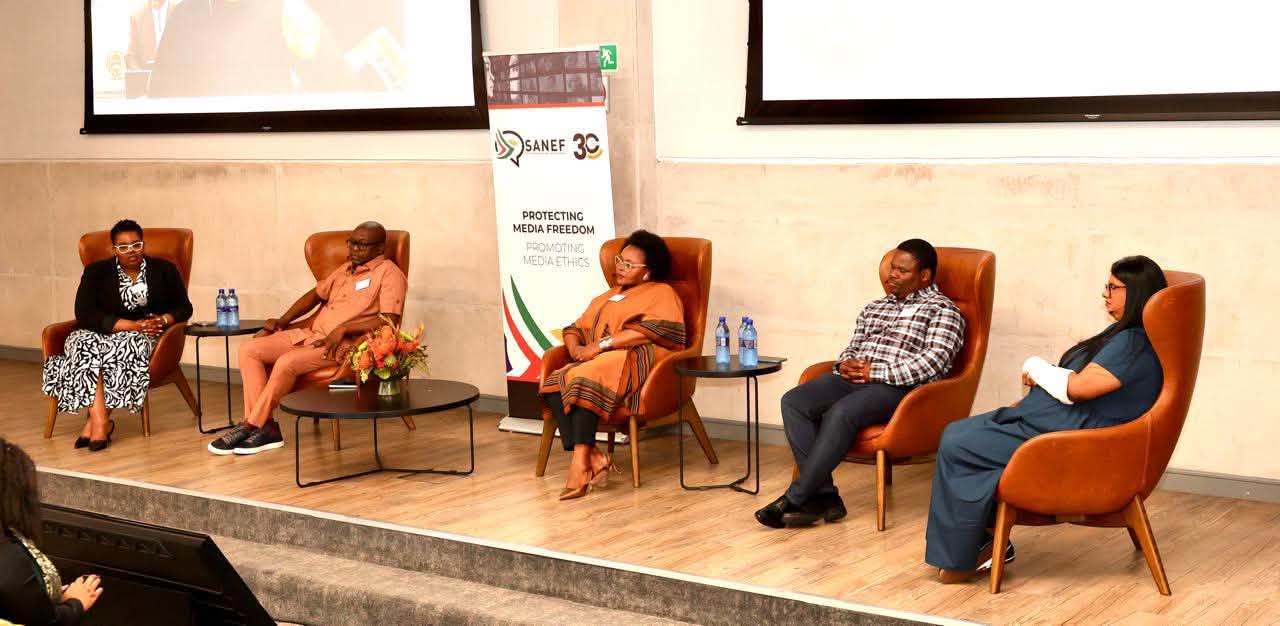
« Who is a journalist, anyway? » This was the deliberately provocative question posed at a gathering organized by Nedbank and the South African National Editors’ Forum (SANEF) in Durban. Journalists, editors, freelancers, content creators, and influencers discussed the evolving media landscape, the credibility of information, and the responsibilities associated with digital influence.
On September 9, 2026, Nedbank and SANEF brought together key figures from the South African media landscape to reflect on the future of journalism and new ways of telling news stories. Journalist Katy Katopodis, who opened the evening, asked a deliberately provocative question: « Who is a journalist anyway? »
The reality is simple: the media landscape has changed profoundly. Today, anyone with a mobile phone and a social media account can reach a wide audience. Content creators and influencers are increasingly participating in national conversations, shaping public opinion, and sometimes uncovering important stories.
Reach, influence, and truth
However, this evolution raises new questions regarding credibility and responsibility. Reach is not the same as journalism. Influence is not the same as responsibility. And virality is certainly not the same as truth. Discussions focused notably on the relationship between creators and traditional media. While creators seek more collaboration with media outlets, journalists emphasize the importance of source verification, fact-checking, and professional ethics.
AI and disinformation in the spotlight
Artificial intelligence adds a new dimension to these issues. The proliferation of AI-generated or manipulated content makes disinformation harder to detect, while unverified content can spread very rapidly. Once misinformation goes viral, the correction does not necessarily reach the same audience. In this context, verification and accountability become the responsibility of everyone who produces and disseminates information.
Influence as Responsibility
Creator Ntathu Zungu also emphasized the need to protect the truth, remain authentic, and preserve one’s independence. Her remarks serve as a reminder that having an audience also entails responsibility. The more significant a role creators play in the flow of information, the more critical issues of ethics and credibility become. This meeting between traditional media and creators does not necessarily seek to pit two worlds against each other. Instead, it opens up a discussion on how journalists and creators can evolve together within a rapidly transforming media landscape.
In Durban, one question remains: who is a journalist today? And above all, what responsibilities come with telling stories to a wide audience?