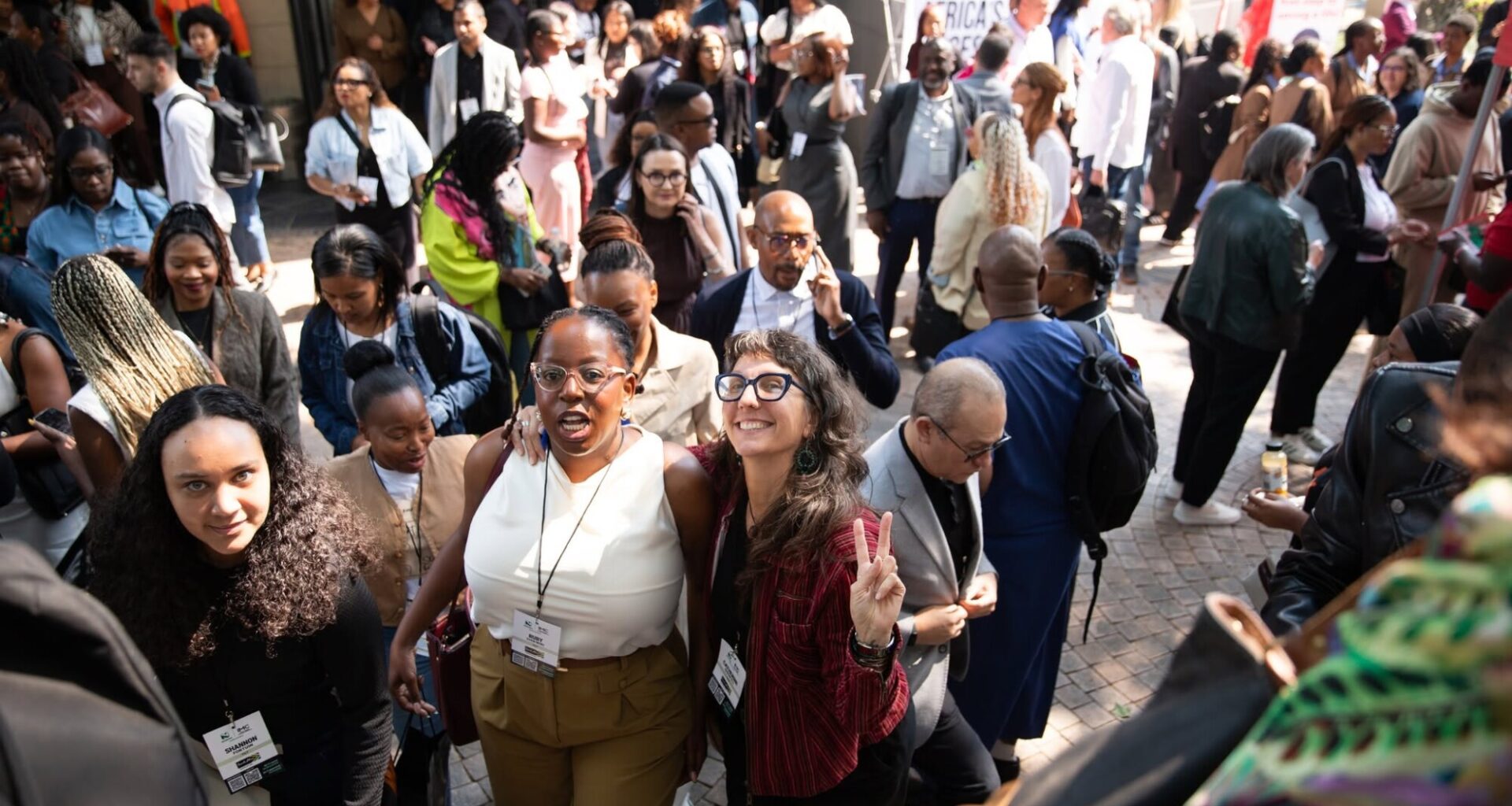
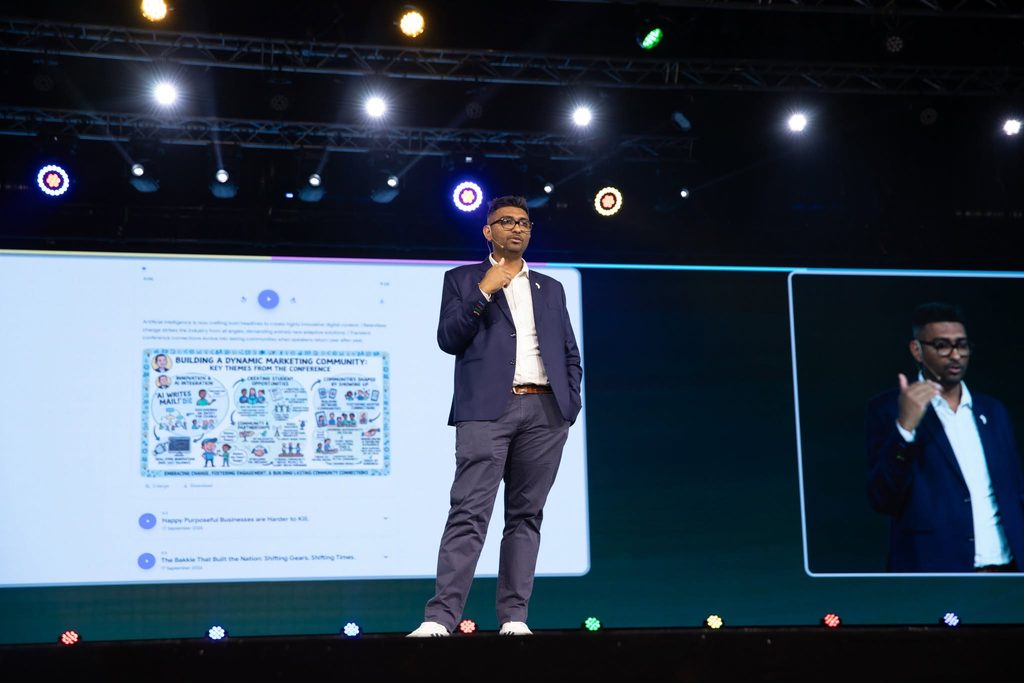
Based on content published by Modern Marketing and the official pages and social media accounts of the IMC Conference, the 2026 edition, held on September 17 in Johannesburg and online, brought together executives, marketers, creatives, entrepreneurs, and representatives of the new generation under a compelling theme: « Shift Happens. ». Beyond discussions on artificial intelligence, creativity, culture, trust, and Gen Z, a clear trend emerged: marketing is not merely changing its technologies; it is changing its mindset.
Artificial intelligence was everywhere, yet it was not the sole focus of this year’s IMC Conference. As the sessions unfolded, another reality came to light: while tools are evolving rapidly, so too are consumer expectations, the relationship with brands, and the role of marketing professionals. From Google to VML, Publicis Groupe to Dentsu Africa, and KFC India to major South African brands, the presentations outlined several paths of transformation that extend far beyond the issue of AI.
AI is accelerating, but it doesn’t solve the question of purpose
Naturally, one of the major discussions at the IMC Conference 2026 centered on artificial intelligence. Milan Naran from Google showcased tools capable of rapidly transforming data into actionable insights and making certain technological capabilities accessible to professionals who are not necessarily developers.
The challenge, therefore, is no longer simply whether marketing professionals will use AI, but what they will actually do with it. Kabelo Makwane, Country Director for Google South Africa, proposed a three-stage framework: WOW, HOW, NOW. In other words, moving from amazement at AI’s possibilities to understanding them, and finally to integrating them into concrete applications.
This evolution reflects a significant shift. After the initial phase of fascination, companies are gradually entering a phase focused on creating value. AI can accelerate certain tasks, shorten production cycles, and allow for the testing of more ideas. Yet the question remains: how do we translate this speed into business results and value for audiences?
Producing faster does not mean creating better
This issue was particularly prominent in discussions focused on creativity. Jarred Cinman, CEO of VML, highlighted a reality that is now hard to ignore: AI can generate multiple campaign concepts in minutes. However, technology alone cannot imbue them with intent, emotion, or true uniqueness.
In other words, while machines can help increase output, the human element of differentiation becomes potentially even more critical. Tahaab Rais of Publicis Groupe also shifted the focus of the debate. He argued that the real shift is not merely technological, but psychological. In an environment where professionals have access to ever-increasing amounts of information and tools, their ability to simplify, make choices, tell stories, and create meaning becomes decisive.
The marketing challenge, then, may lie less in producing more and more, and more in making better choices within an environment saturated with possibilities.
Local culture becomes a strategic advantage
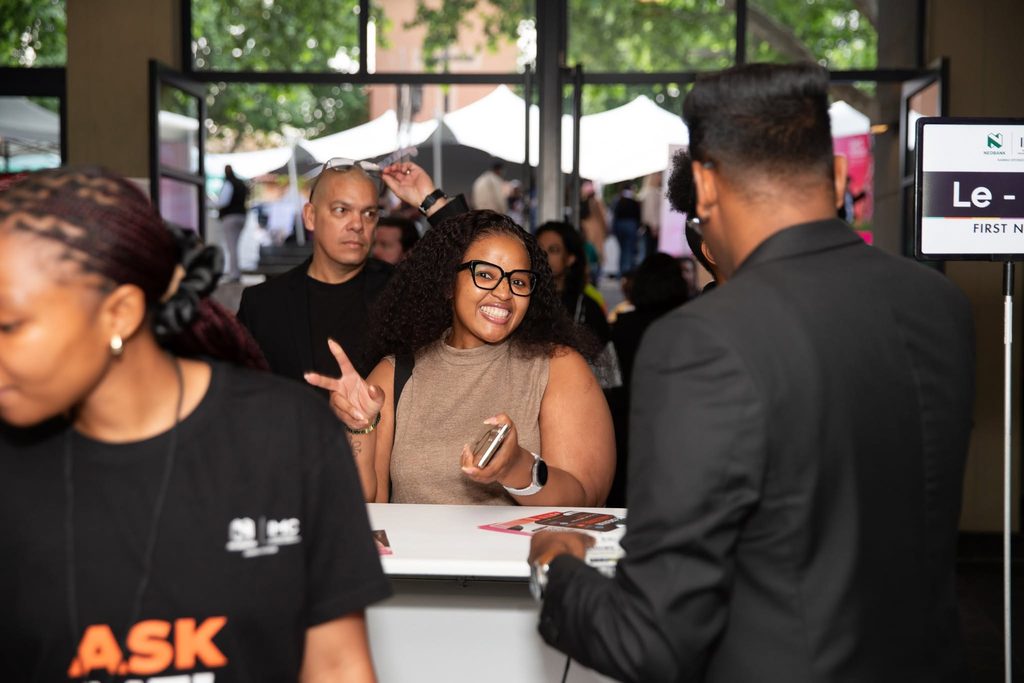
The other major takeaway from Johannesburg concerns culture. Suhlay Limbada, CMO of KFC India, argued that an international brand cannot simply replicate the same creative formulas everywhere. To truly connect with a market, a brand must understand what local populations experience, love, value, and share. The issue, therefore, is not necessarily choosing between a global idea and a local one. Instead, it is about finding elements within a universal idea that can be made relevant to a specific context.
This approach resonates strongly with the realities of the African continent. Markets across the continent do not form a homogeneous whole. Languages, cultures, digital habits, social references, and relationships with brands vary significantly from one country to another—and sometimes even within a single country.
In this context, standardization can quickly reach its limits. The message delivered in Johannesburg is clear: culture should not be stripped away from creative work to make it more « universal. » On the contrary, it can be the very thing that strengthens it.
Telling Africa’s story through its own voices
This cultural issue is directly linked to the question of storytelling. Dr. Gcina Mhlophe’s remarks on storytelling placed stories, languages, and memory at the heart of the discussion. Her intervention served as a reminder that telling Africa’s story is not merely about producing content regarding the continent.
It is also a matter of knowing who is telling the story, from what perspective, and using which points of reference. For brands, media outlets, and institutions alike, this question is becoming increasingly important.
Africa is no longer merely a territory where campaigns conceived elsewhere must be adapted. It is also a space where creators, narratives, cultural touchstones, and imaginative visions are emerging—elements capable of fueling creative industries far beyond their home markets.
The development of these narratives can thus contribute to a broader shift: a gradual transition from an Africa primarily represented by others to an Africa increasingly capable of producing and disseminating its own representations.
Consumers no longer belong to the brand
Another recurring theme across several sessions is that brands have less control over their image than they used to.
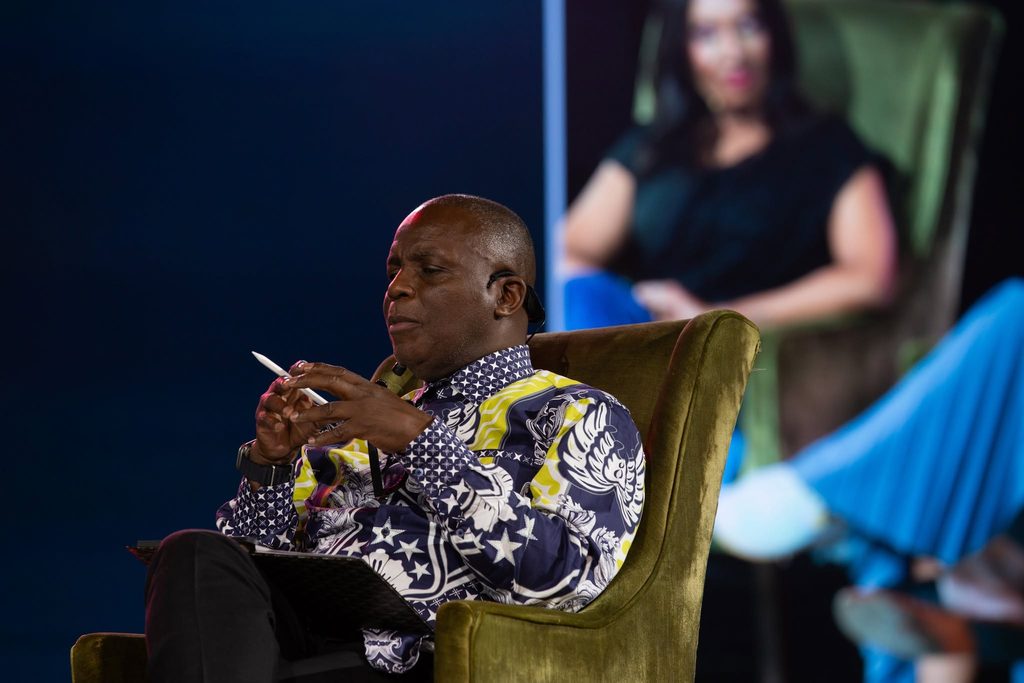
Thebe Ikalafeng, Khensani Nobanda, and Opeyemi Lawal—speaking on a panel featuring leading African CMOs—highlighted this transformation in the relationship between brands and consumers. Companies can still define a strategy, an identity, and a positioning. However, they no longer have full control over how these elements are interpreted, discussed, or even subverted.
Social media has shifted the balance of power. Consumers comment, create, recommend, critique, and sometimes even reshape a brand’s codes themselves. This has led to an evolution in the marketer’s role: it is no longer just about speaking to audiences, but about understanding what they say, what they do, and what they expect. Nedbank’s use of Roblox to raise financial awareness among young people illustrates this desire to reach audiences in their own environments, rather than asking them to join spaces created by brands.
Gen Z and Gen Alpha: stop making assumptions
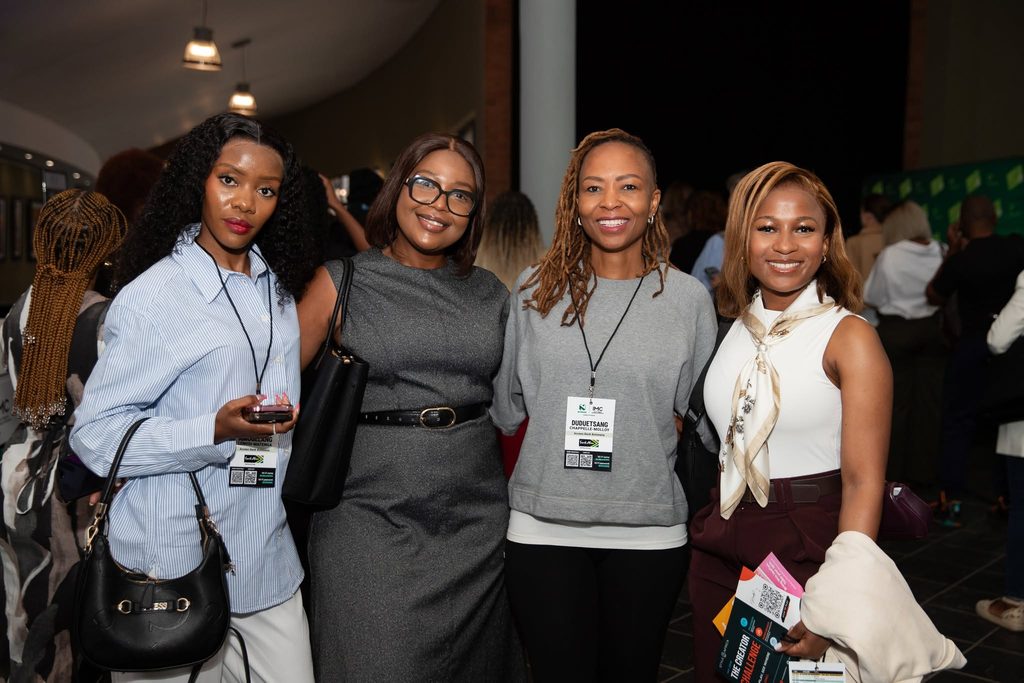
The panel dedicated to new generations took this discussion a step further. Joined by Gugu Mthembu, Desmond Koolen, and Marko Stavrou, the conversation focused on how brands can engage with Gen Z and Gen Alpha. One principle stands out: do not speak on their behalf. Brands need to listen, ask questions, and build with these generations more, rather than simply designing campaigns for them.
This distinction is important. Young audiences are not merely another marketing target. They actively participate in creating the trends, content, and conversations that influence brands. The rise of communities, creators, social platforms, and participatory behaviors further reinforces this dynamic.
For marketing professionals, understanding these audiences means less reliance on generational clichés and more focus on staying close enough to actual behaviors to observe what is truly changing.
What if being « boring » has become a risk?
Creativity also played a major role in the discussions. Tiffany Markman posed a simple question: why should communications always aim to be perfectly safe and acceptable? Her talk on the concept of « Specifically Odd » advocates for communication that surprises, sparks a reaction, and breaks away from overly predictable formulas. In an environment where content is produced at high speed and brands are constantly publishing, banality can become a real problem. Being « correct » no longer guarantees being noticed. Roanna Williams and Fran Luckin from Boundless also emphasized the need for boldness. Constraints, originality, trust in audience reactions, and a willingness to embrace risk are all prerequisites for truly distinctive creative work.
At a time when AI facilitates content production, this question takes on a new dimension: if everyone can produce content faster, what will allow a brand to remain recognizable?
The CMO is no longer just the head of marketing.
This transformation extends to the role itself. Marc de Swaan Arons, founder of the Institute for Real Growth, advocated for a vision in which marketing no longer operates in isolation from corporate strategy. Marketing must understand the world, define a direction, combine human and technological capabilities, and contribute directly to business performance. Thebe Ikalafeng has reflected similarly on the role of the CMO: understanding the consumer, building the brand, driving growth, and participating in the company’s strategic decisions.
This reflects a significant evolution of the function. The CMO of tomorrow cannot simply be someone who oversees campaigns, social media, or advertising. Their role is shifting toward that of a driver of corporate transformation—someone capable of connecting brand, consumer, culture, data, and revenue.
« Africa is the Shift »: change goes beyond just brands
The perspective offered by Dawn Rowlands, CEO of dentsu Africa, adds a particularly interesting dimension to these discussions. Her presentation, titled « Africa is the Shift, » invites us to look beyond mere marketing practices.
She highlights several structural challenges facing the continent: market fragmentation, access to resources, data, intellectual property, technology, and the ability to move quickly from experimentation to implementation. Above all, her remarks raise a broader question: should Africa continue to be primarily a consumer of technologies, platforms, and solutions designed elsewhere?
This question runs as a common thread through several presentations at the IMC Conference. Artificial intelligence, data, the creative industries, content, and new technologies can certainly be utilized by African players. But they can also become areas where the continent develops its own solutions, data, talent, and intellectual property. This may well be where the « shift » takes on a broader dimension.
From speed to trust
Amidst all these discussions about innovation, one concept stands out: trust. Marc de Swaan Arons describes it as a form of essential currency in the new marketing landscape. This trust extends beyond consumers to include employees, communities, and partners.
It is becoming increasingly critical as brands operate in an environment where AI facilitates content creation, information spreads rapidly, and consumers can react instantly to any brand communication. Technology can accelerate the relationship between a brand and its audience, but it does not guarantee the relationship’s longevity. The faster tools allow us to produce, the more trust, consistency, and authenticity can serve as key differentiators.
The real « shift » may lie in how we play the game
Across the various presentations at this year’s event, the theme « Shift Happens » ultimately took on several meanings. There is technological change, driven by AI. There is cultural change, with the need to better understand local markets.
There is generational change, with the rising influence of Gen Z and Gen Alpha. There is organizational change, with marketing becoming more integrated into business decisions. And finally, there is a shift in mindset: listening more, experimenting faster, embracing uncertainty, and placing greater emphasis on the human element.
The message delivered by Kabelo Mabalane—who opened and closed the conference by focusing on the idea of »playing the game »—ultimately encapsulates this dynamic. Change cannot simply be observed from the outside. It requires stepping back, taking stock, understanding what has changed, and deciding how to move forward.
In Johannesburg, the IMC Conference 2026 therefore did not merely ask how AI will transform marketing. It posed a broader question: in a sector where tools, audiences, and markets are evolving simultaneously, what changes must marketing professionals themselves make? And that is likely where the real « shift » begins.